
Mobile timing game in development
.panic
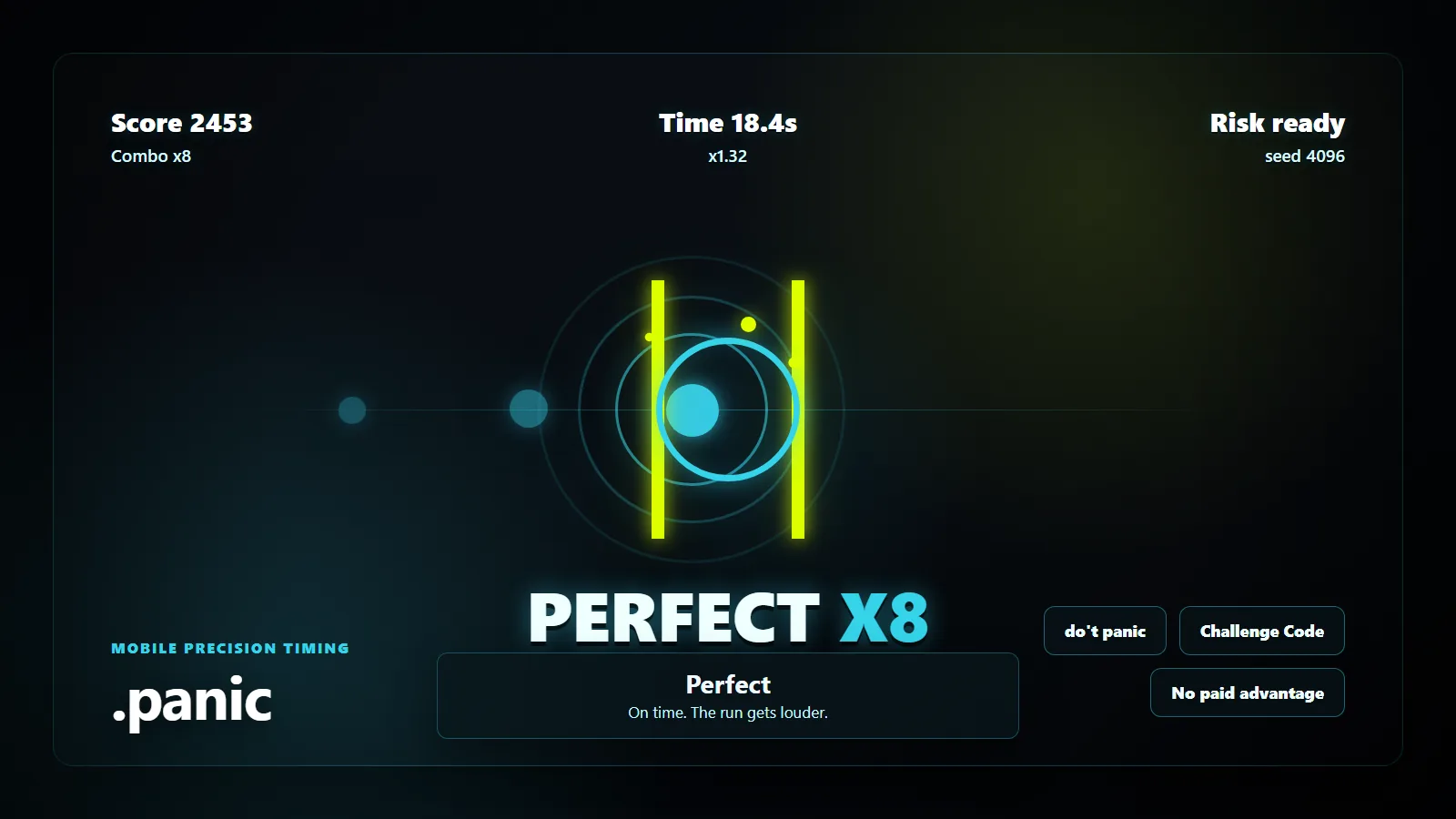
One tap. One chance. Don't panic. The screen is quiet on purpose: a dot moves, the target waits, and the run comes down to the moment your thumb commits.
Visual direction
Black field, cyan motion, lime target.
.panic should read before the player has time to think. Score, timer, seed, target, dot and tap feedback are visible at once, while the rest of the screen stays quiet enough for pressure to build.
The crossing
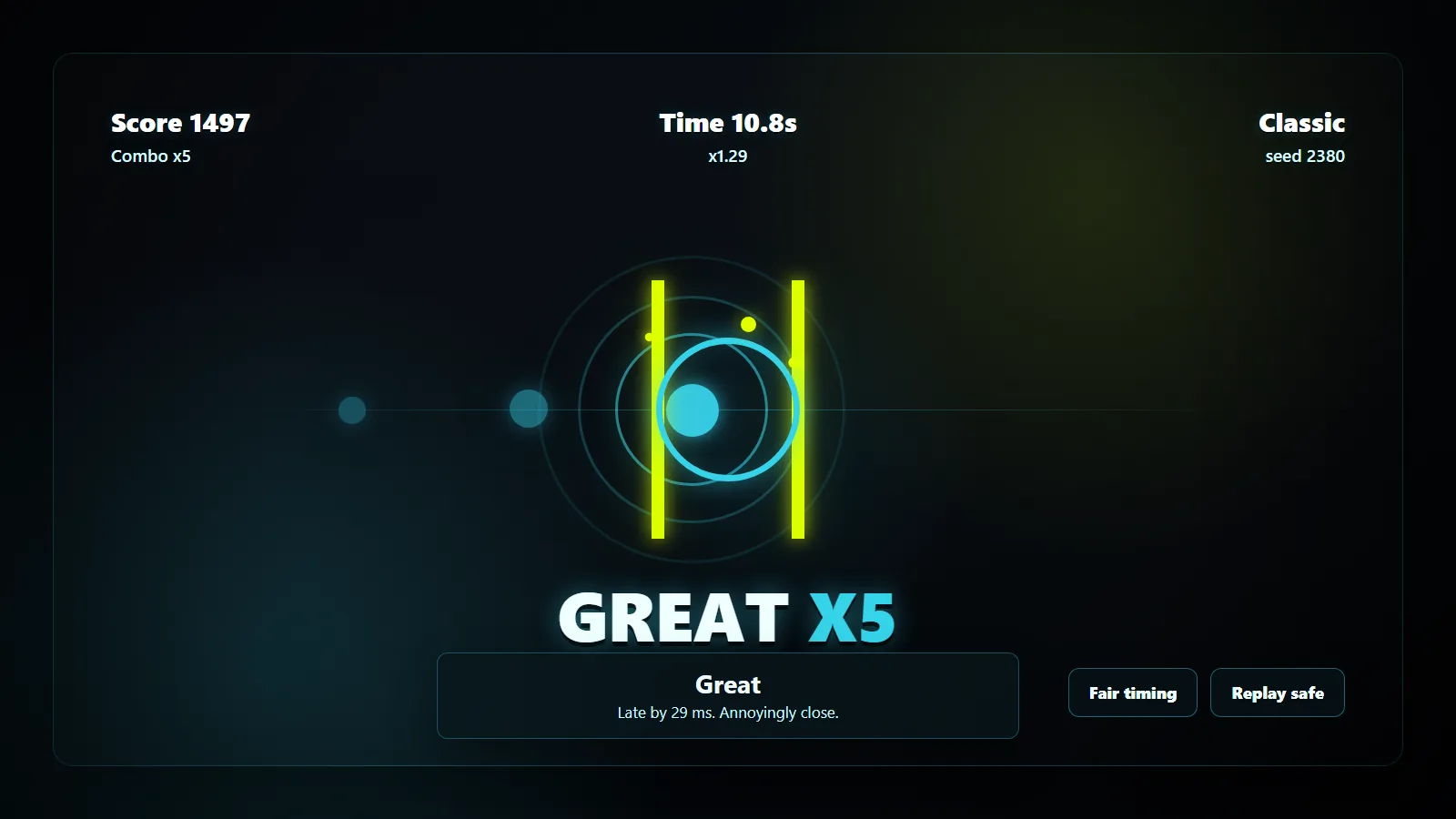
Tap as the dot crosses the visible target. The feedback is fast enough to feel personal and clear enough to understand instantly.
Risk choice
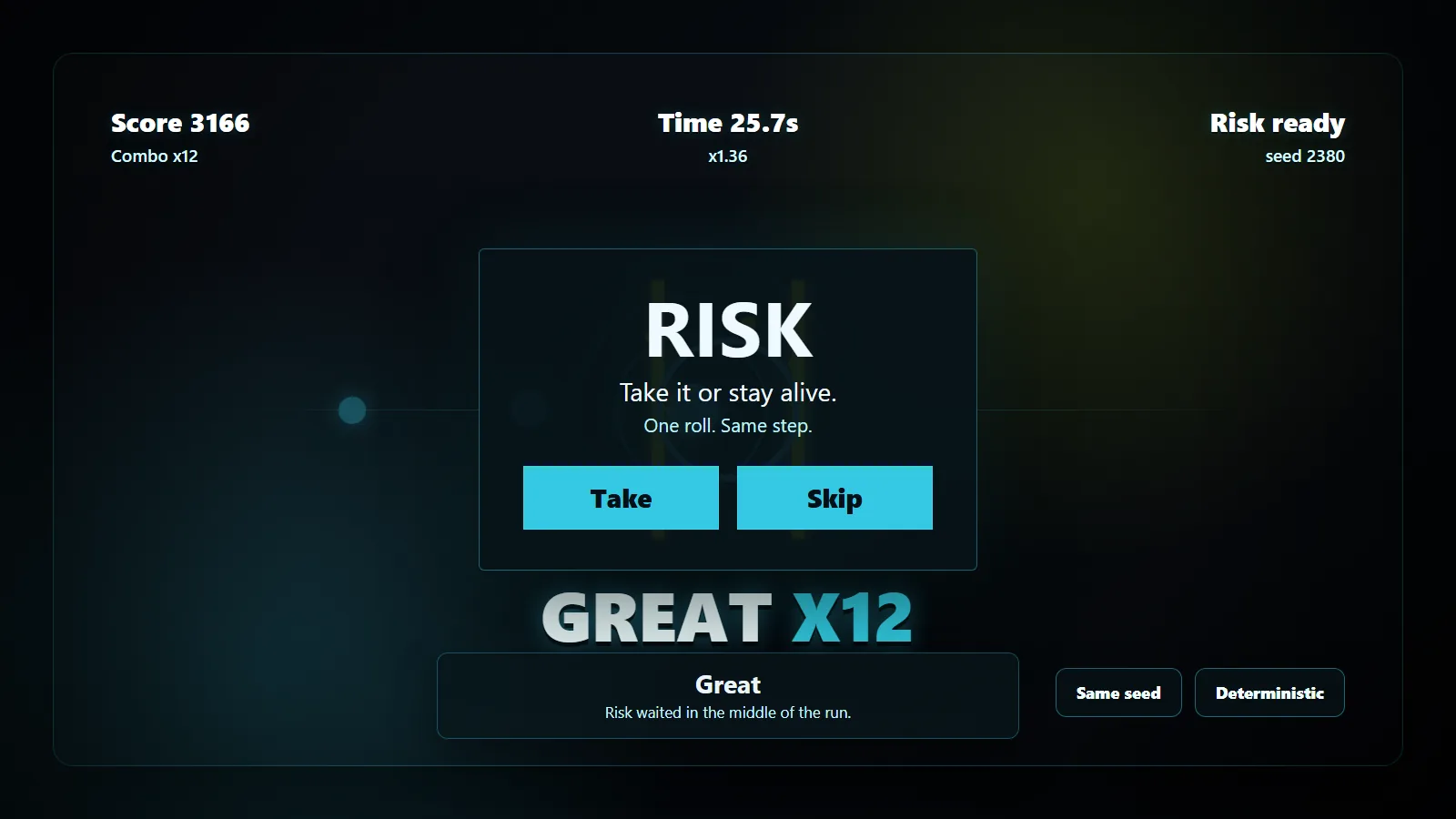
Risk Orbs add a controlled choice: take the roll, skip it, and keep the same seed comparable either way.
Same-seed result
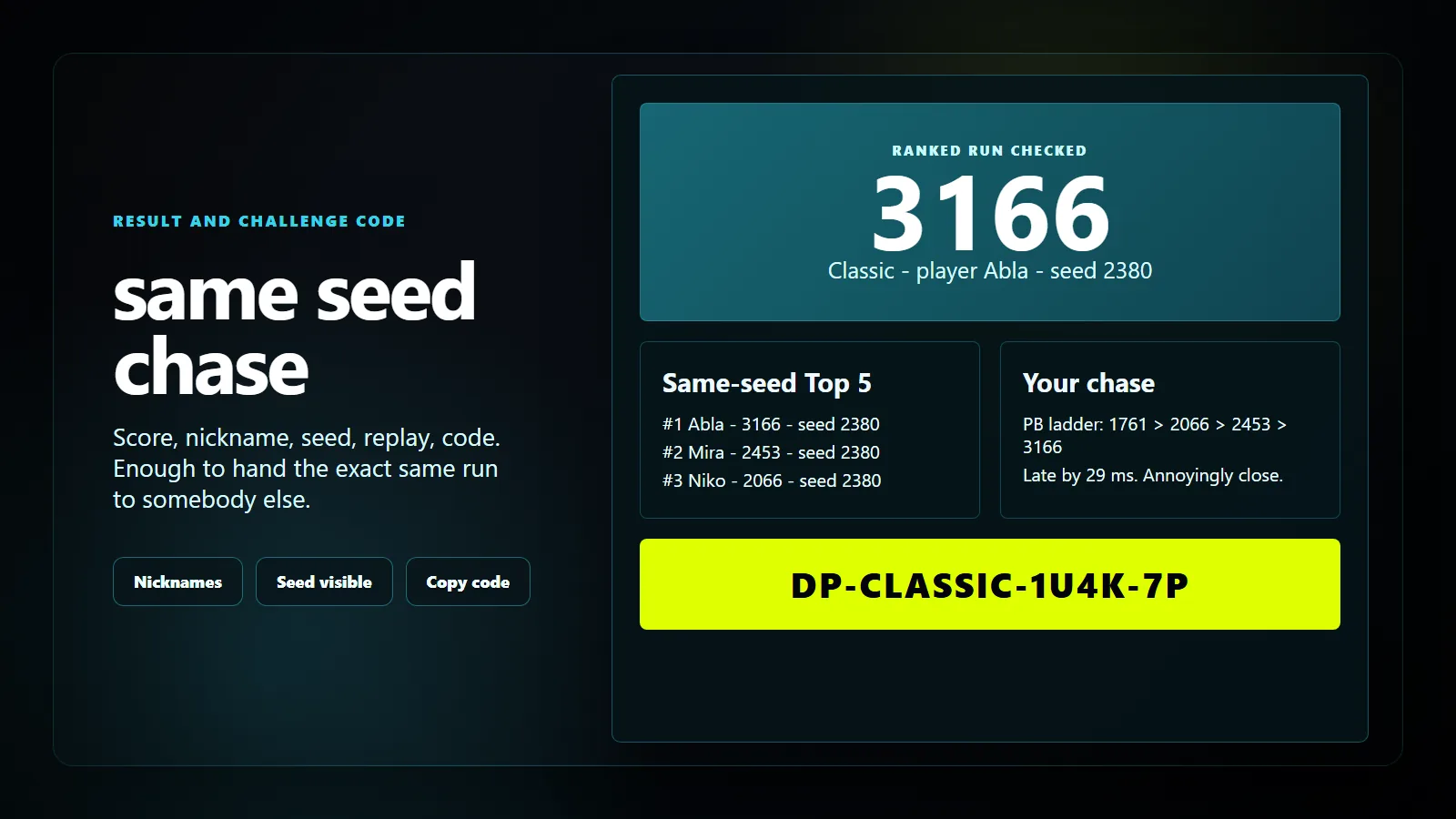
A result needs to be readable: nickname, seed, score, replay context, same-seed Top 5 and a code that says exactly what to chase.
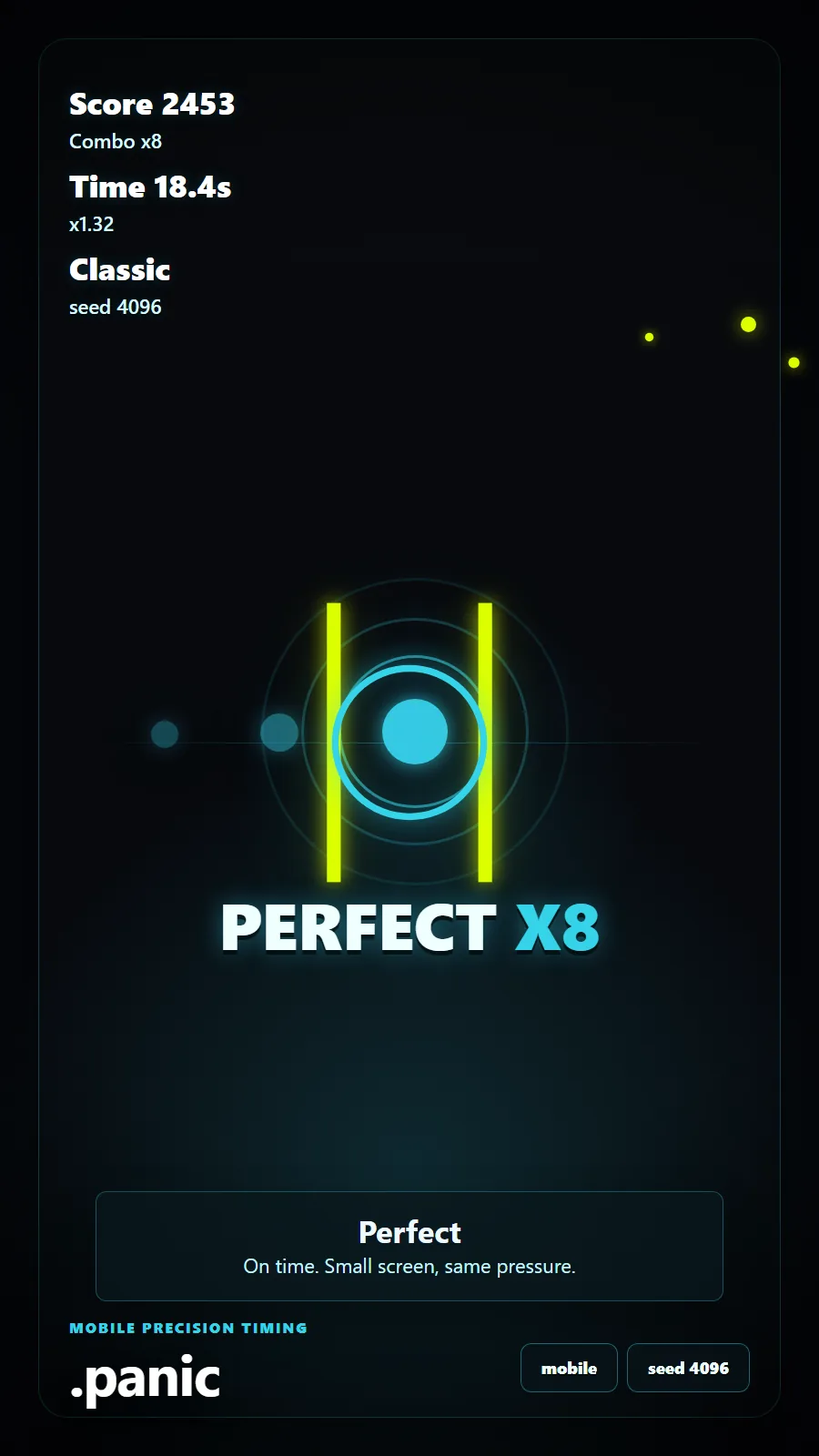
Mobile portrait
The same pressure has to survive the phone layout: readable HUD, centered target, visible seed and tap feedback that does not crowd the run.
Mobile-first feel
Small screen, same pressure.
The run should work in one hand without becoming cramped: status stays readable, the target owns the middle, and tap feedback stays out of the way.
Gameplay shape
A simple rule that gets personal fast.
The loop is short because the pressure does not need padding. Watch, tap, recover and decide whether the next seed deserves another attempt.
Precision timing
The dot is tiny on purpose. The real opponent is timing, not screen clutter or lucky physics.
Risk Orbs
Risk Orbs add controlled trouble while keeping the route comparable.
Survival scoring
A strong run should feel earned one tap at a time: better timing, longer pressure, fewer excuses.
Name and tone
A small name for a tense game.
The name is short, memorable and tied to the dot at the center of the game.
Competition design
Same seed, same pressure, fair comparison.
The multiplayer feeling comes from shared pressure, not a lobby. Players can take the same seed, compare the same route and know the difference came from timing rather than matchmaking noise.
Challenge Code
A code turns a run into a clean challenge: same seed, same mode, same route.
Daily, weekly, monthly
The calendar becomes a shared target: one daily, weekly, or monthly route, and a clean reason to try again tomorrow.
Replay and ghost
Replay keeps the run readable after it ends and makes comparison easier to understand.
Server authority
Ranked scores are planned around verification from the run itself, not screenshots.
Modes
Short sessions, repeatable pressure.
The modes keep the core readable while changing the reason to play again: build a score, practice timing or chase a shared seed.
Classic
The main score chase with rising pressure and quick restarts.
Pure Skill
Timing-focused play without extra risk choices.
Practice and challenges
Practice helps the hand learn. Challenge runs give that practice a shared target.
Release direction
Built around mobile-sized panic.
The public platform direction stays simple for now: mobile. The game belongs close to the thumb, where a good hit feels immediate, a miss is obvious and another run is never far away.
Player promise
Competition should not be for sale.
The player promise is simple: competition is earned, not bought. Cosmetics can change the mood, but they should not make the run easier.
No ads
No rewarded ads, banners or ad-removal purchase loop.
No currency economy
No coins, energy meters, paid rolls or battle pass chores.
No paid advantage
Paid content cannot buy easier timing, better odds, revives or leaderboard power.
Readable ranked play
Cosmetics can change the mood. Ranked play still has to stay readable and fair.
.panic FAQ
What is public for now.
This page is a product preview, not a store listing. Release dates, store links and final leaderboard claims should wait until they are ready to be clicked and tested.
What kind of game is .panic?
A compact timing arcade game about one moving dot, one visible target and one tap.
Is it multiplayer?
Not realtime multiplayer. The competitive feeling comes from shared seeds, Challenge Codes and same-run comparison.
Where is it planned to launch?
The current public direction is mobile. Store pages and release details will wait until there is something ready to test publicly.
Will paid content affect scores?
No. The product direction excludes paid score boosts, easier timing, revives, lootboxes, battle passes and paid leaderboard advantage.